
-
 For Everyone
 -
2 h.
-
 Serbian
Advanced Bio-Controlled Systems 2/2: Build Your Own Prosthetic
Continue your bioengineering journey! After mastering the basics of recording bioelectric signals in Workshop 1, it’s time to level up: creating advanced bio-controlled systems.
In this workshop, you’ll design and build your own functional neuroprosthetic hand controlled by your muscle signals, create interactive installations that respond to your emotional state, or make a bio-controlled musical machine. This is a laboratory where your creativity meets neuroscience.
About This Workshop
What You'll Learn
Advanced Recording Techniques:- Precise sensor calibration for different applications
- Multi-channel recording (simultaneous tracking of multiple signals)
- Noise filtering and signal quality optimization
- Mapping complex movements to digital commands
- Principles of neuroprosthetics and assistive technologies
- Creating feedback systems (biofeedback)
- How the brain learns to control external devices
- Neural plasticity and adaptation
- Neuroprosthetic Hand – Functional robotic gripper controlled by EMG signals
- Bio-reactive Installation – Light and sound system responding to heart rate and brain waves
- EMG Musical Instrument – Creating music through muscle signal control
- Multi-user System – Connecting multiple people in a shared bio-controlled project
Hands-On Learning
This is the day you move from simple projects to real engineering. The workshop begins with a "build challenge" – you receive a Spiker:bit, micro:bit, servo motors, sensors, The Claw (robotic gripper), and various actuators. For the neuroprosthetic hand: You'll place EMG electrodes on your forearm and map different muscle groups. You'll program a system that recognizes when you clench your fist (closes the gripper), when you relax your hand (opens the gripper), and when you rotate your wrist (rotates the gripper). You'll test precision in grasping objects and adjust control sensitivity. For the bio-reactive installation: You'll combine ECG and EEG signals. Your heart rate controls the tempo of light pulses, while concentration level (beta waves) changes the light color. Relaxation (alpha waves) slows all effects. You'll create a complete experience that visually represents your current psychological state. For the EMG musical instrument: Each muscle becomes a note or sound. Bicep squeeze triggers bass drum, finger twitch activates melody, shoulder movement changes pitch. You compose music through movement choreography.Why Sign Up?
This is a workshop where you actually build something functional. Your projects aren't demonstrations, but fully operational systems that can be used, further developed, and customized. You'll understand how bioelectric signals can be transformed into precise control of complex systems. This is knowledge directly applicable in medicine (prosthetics, rehabilitation), assistive technologies (for people with disabilities), creative engineering, and research. This workshop is ideal for:- Students of biology, medicine, engineering seeking hands-on experience with BMI technology
- Professionals working in healthcare or assistive technologies
- Creatives wanting to combine art with neuroscience
- Anyone who completed Workshop 1 and wants to dive deeper into bioengineering
About the Instructor
The workshop is led by Aleksa Vasić, Master Biologist and science communicator. Aleksa combines biology, neuroscience, and technology to bring modern scientific discoveries closer to the general public. With years of experience working with Backyard Brains equipment, Aleksa has led numerous workshops on electrophysiology and bioengineering, always with a focus on practical work and creative problem-solving. Note: Attendance at Workshop 1 or basic familiarity with the Spiker:bit platform is recommended.Have a question?
Contact UsMore Events For You
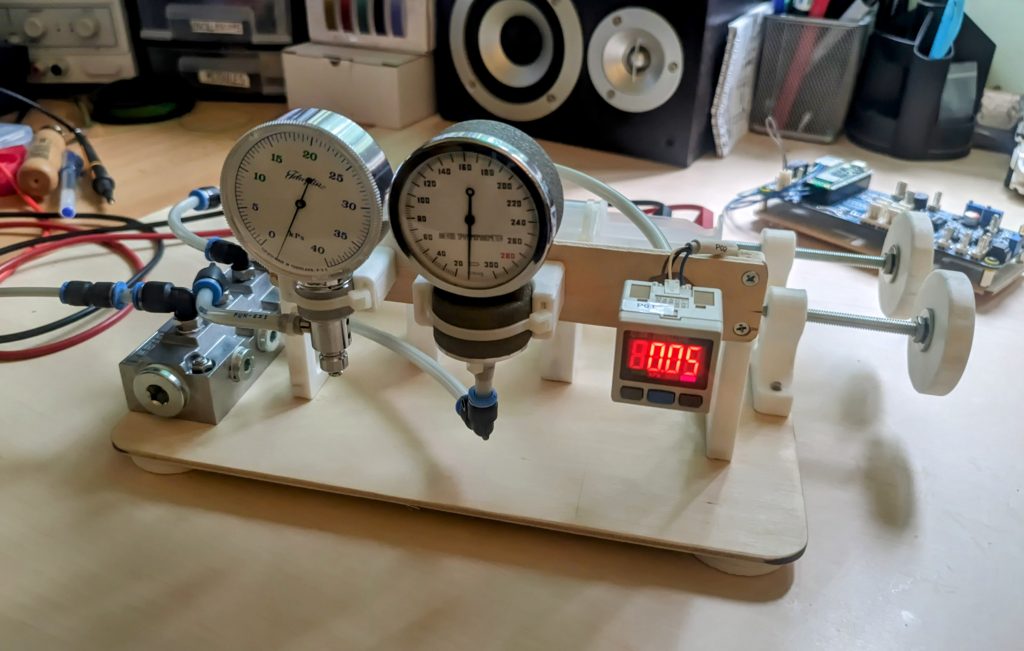 Inside a Blood Pressure Monitor: From Cuff to Algorithm
Look inside a blood pressure monitor — from the cuff and sensors to the algorithms that turn signals into the numbers you see on the screen.
 When the Temperature Rises: Interactive Decision-Making Simulation During Climate Extremes
Interactive climate workshop where through team simulation you manage a city facing climate extremes. Make decisions, manage resources, and learn how smart and sustainable solutions are born at the intersection of science and life.
 The Inner World of Other People: How Well Do We Truly Understand?
Regardless of our psychological background, each of us tries to understand the people around us. In this workshop, we explore our capacity for mentalization — the ability to understand the feelings, intentions, and perspectives of others.
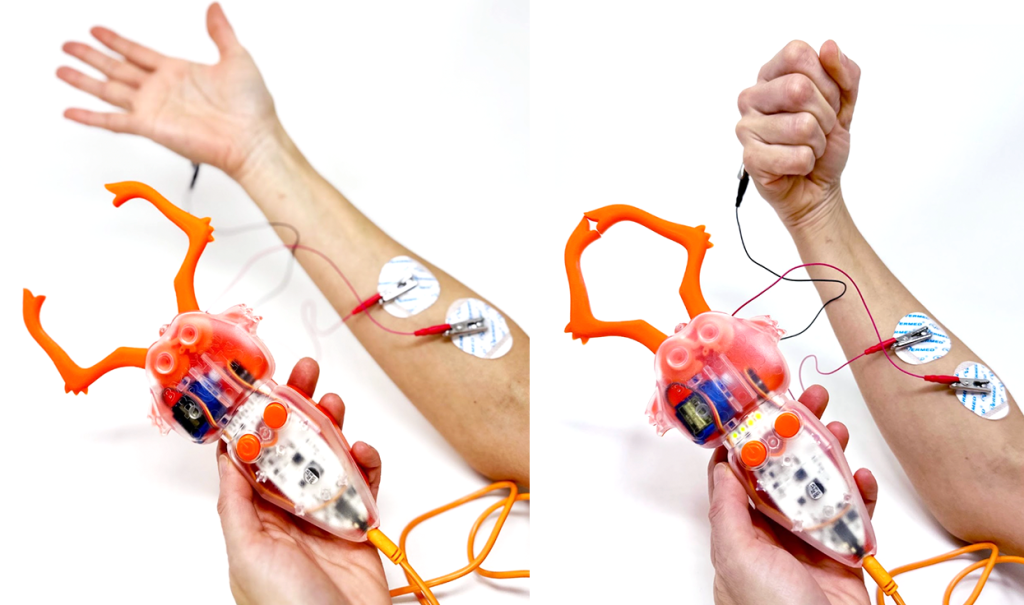 You Are the Controller: Brain-Machine Interface Workshop
Control a robotic claw using electrical impulses from your own muscles. Through hands-on experiments with Backyard Brains Spiker:bit and The Claw, discover how brain-machine interfaces really work.