
-
 For Everyone
 -
For Everyone
-
2 h.
-
 Serbian
Mini STEM Garden 1/2: The City as a Garden – Arduino and Light Control
The first of two workshops combining ecology, technology, and hands-on work. The workshops can be attended as a series or individually.
In this workshop, you’ll explore urban gardening and its role in modern cities, then discover the technology that makes it smarter and more efficient. You’ll plant microgreens and learn how proper conditions directly affect their growth. Through hands-on work with Arduino, you’ll connect biology and technology by programming an automatic light control system.
Note for participants: Participants are encouraged to bring their own laptops with Arduino IDE installed if possible. We will try to provide computers for those who cannot bring their own.
Download link (for Windows users): arduino-ide_2.3.7_Windows_64bit.exe
Installation guide: Download and install Arduino IDE
About This Workshop
Science Through Practice
In the first part, you'll explore the concept of urban gardening, its benefits and challenges, and the different forms of urban agriculture. You'll plant microgreens in special pots, learning about proper care, light, and moisture. In the second part, you'll work with the Arduino development system and a light sensor — collecting data from the environment and using it to turn lighting on or off to extend the microgreens' light exposure period.What Will You Learn?
- Why growing food in urban environments matters and what the benefits of urban gardening are
- How to properly plant, care for, and harvest microgreens
- The impact of light and moisture on plant growth
- What Arduino is, its components, and how it's used
- How Arduino collects data using sensors and how to program a system for automatic light control
Why Sign Up?
Through a hands-on project, you'll see how technology solves real problems in sustainable food production. The workshop gives you the foundation for further experiments and shows how STEM skills can directly contribute to sustainable urban living. Skills you gain can be applied at home, at school, or in future STEM projects.About the Instructors
Tamara Đorić Šparović is a geography teacher with 25 years of experience in education. She works at Matematička gimnazija in Belgrade, where she actively participates in developing domestic and international projects connecting science, technology, and sustainable development. She is the author and coordinator of the Erasmus+ K2 project "Smart School Garden" and founder of the Sustainable Development Section, focused on connecting STEM fields, ecology, and innovative teaching methods. Jovica Milisavljević is a physics teacher and head of the Applied Physics and Electronics section, with extensive experience in developing experimentally oriented teaching. He is the author of professional papers on the use of computers and IT in school laboratories. He advocates for the concept of "learning by doing," in which students actively participate in experiments, measure, analyze results, and connect theory with real physical phenomena.Have a question?
Contact UsMore Events For You
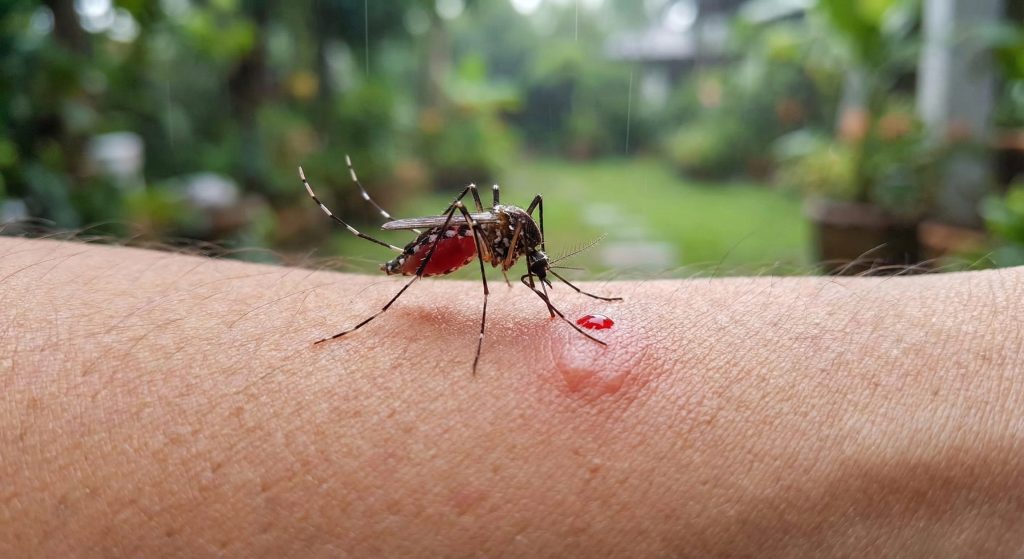 Why Don't We Exterminate All Mosquitoes?
In this workshop, you’ll learn why we shouldn’t simply exterminate all organisms that negatively affect humans in some way, through learning the basic principles of ecology.
 How Does the Brain Think?
Through short experiments and experiential exercises, discover how perception, attention, and reasoning shape our everyday lives.
 One Minute in Their Shoes: Everything We (Don't) Know About Autism
A workshop that combines scientific knowledge and personal experience: learn what Autism Spectrum Disorder is, how it is researched, and what daily life looks like for people with ASD — through interactive activities that put you “in their shoes.”
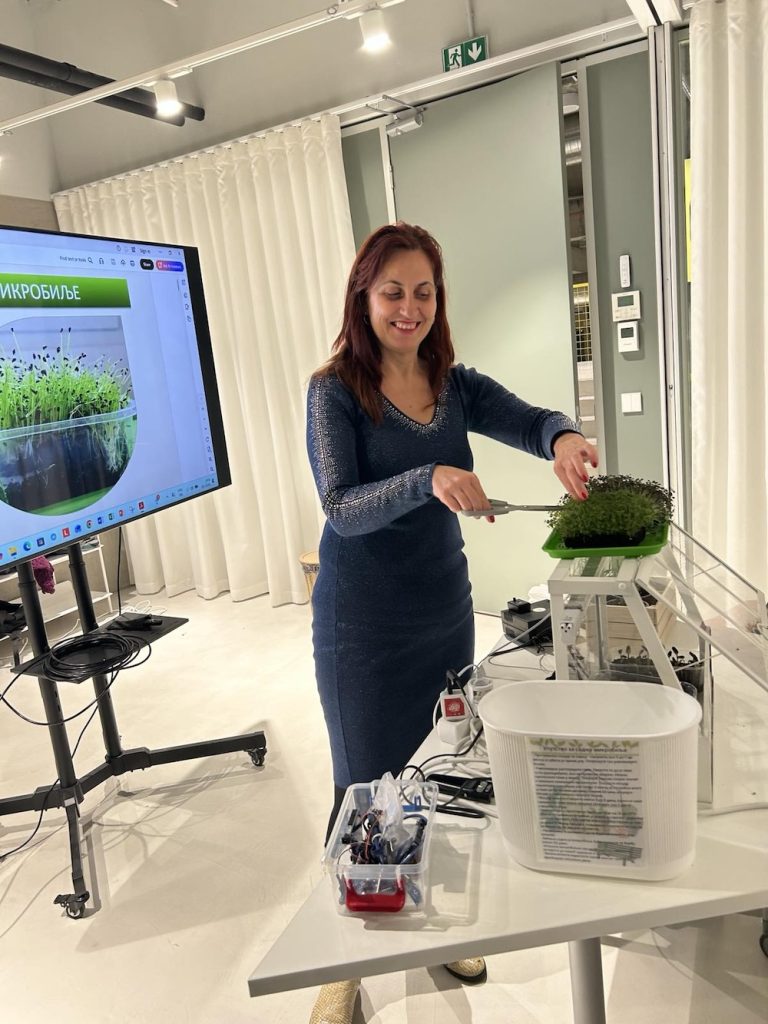 Mini STEM Garden 2/2: Smart Garden in Action – Automated Watering
Build a complete smart garden system with Arduino — connect soil moisture sensors, a pump, and lighting into an automated plant care system.
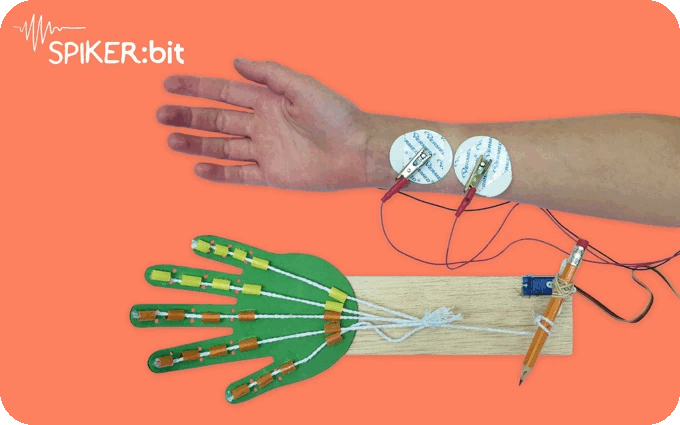 From Signal to Decision: How Fast Does Your Brain React?
How fast is your nervous system, really? Through live experiments with Backyard Brains equipment, measure your reaction time, test your muscles, and discover what happens inside your body in milliseconds.
 Climate Crisis: Interactive Decision-Making Workshop
Interactive climate workshop where through team simulation you manage a city facing climate extremes. Make decisions, manage resources, and learn how smart and sustainable solutions are born at the intersection of science and life.
 Traps of the Digital World: How to Avoid Becoming a Victim?
A workshop on recognizing risky situations, forms of human trafficking, and safe behavior online and on social media.
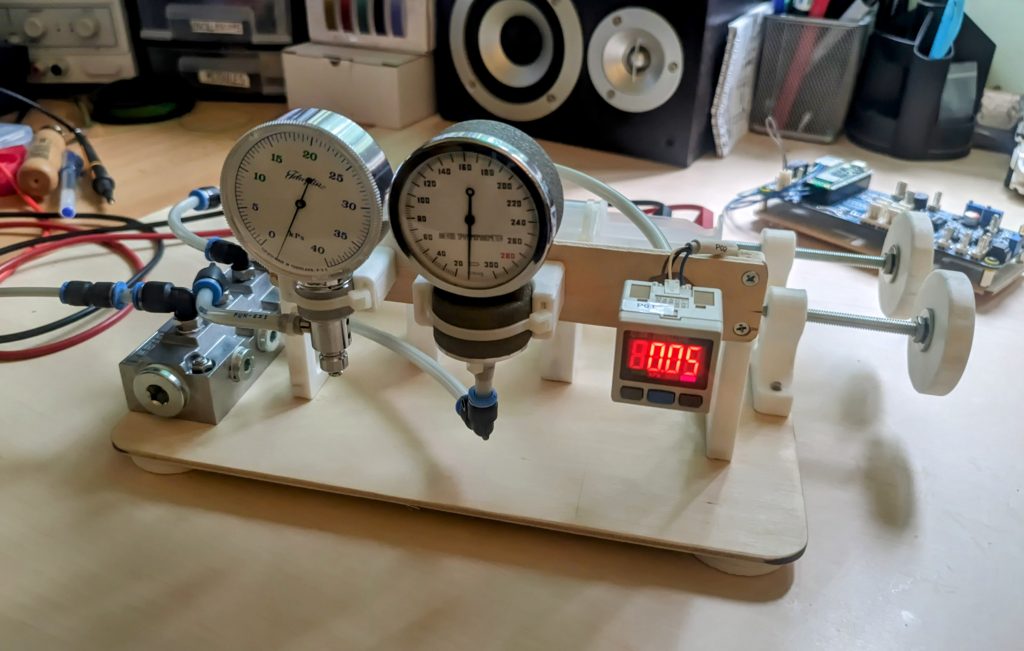 Inside a Blood Pressure Monitor: From Cuff to Algorithm
Look inside a blood pressure monitor — from the cuff and sensors to the algorithms that turn signals into the numbers you see on the screen.
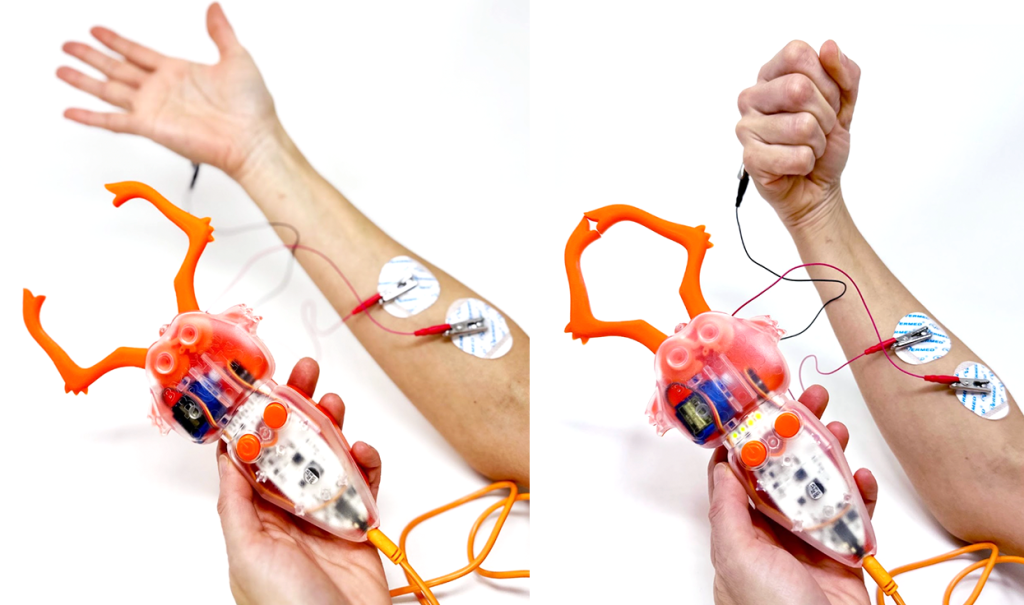 You Are the Controller: Brain-Machine Interface Workshop
Control a robotic claw using electrical impulses from your own muscles. Through hands-on experiments with Backyard Brains Spiker:bit and The Claw, discover how brain-machine interfaces really work.